My Tips For Treating Rosacea
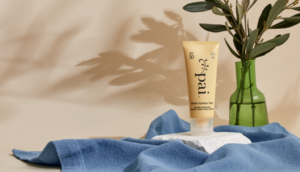
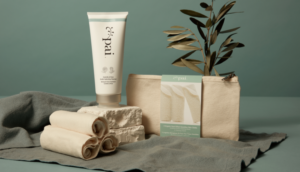
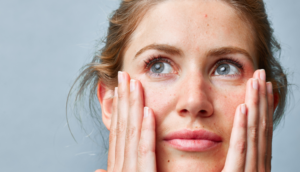
I get a lot of people with rosacea writing to me – particularly at this time of year when the weather gets cooler and central heating is switched on. Allergy-prone skin can be particularly sensitive to temperature variations. Rosacea is a common skin allergy that appears on the face - usually along the upper cheeks and nose. Symptoms include facial redness, dilated capillaries and, in some cases, small hard spots. It is most common in women over the age of 30 and several friends of mine developed the condition during their first pregnancy. If you suffer from rosacea it is important to avoid the following triggers: - Caffeine - Spicy foods - Alcohol in skincare products - Sunlight Moisturise with a chemical-free moisturiser such as our Chamomile & Rosehip Cream. Rosehip is a fantastic skin healer and strengthener while Chamomile (see image) contains azulene, a natural anti-inflammatory, which will cool and calm the flushing. Diet is also important when dealing with all skin allergies and rosacea is no exception. Try and increase your intake of Essential Fatty Acids (Omega 3, 6 & 9) as these can help calm and condition the skin from the inside. Oily fish, seeds and nuts are all good sources as are supplements like a high grade flaxseed oil. Pcynogenol, or pine bark extract, is also believed to be a good natural remedy for rosacea as it has anti-inflammatory, antimicrobial and antioxidant properties.
The Facts About Phenoxyethanol
Cosmetics manufacturers are increasingly responding to customer demand for paraben-free products and removing it from their formulations. While this is a good thing, many are replacing Parabens with another chemical preservative called Phenoxyethanol. If you scan ingredient lists of natural and organic beauty products it is surprising how many companies are using it. However, this synthetic preservative comes with it's own set of problems. - It has been linked to skin irritation and is believed to have damaging effects on the nervous system. - Like Parabens, it has oestregenic properties so should be avoided by endometriosis sufferers or those afflicted with adult acne. - It has a hazard score of 4 on Skin Deep, a brilliant and comprehensive database of cosmetic ingredients. - Its use in cosmetic preparations is restricted in Japan and will be disallowed under the new European organic beauty standard, COSMOS. We don't know for certain how safe or harmful phenoxyethanol is so, at Pai, we take the precautionary approach and leave it out.
The Ultimate Natural Sunburn Remedy
So we've covered sunscreens (chemical v natural), what about After Sun?
If you have caught the rays a little too much then our Chamomile & Rosehip Cream is the perfect antidote.
Chamomile contains azulene, a natural anti-inflammatory, which will cool and calm the skin.
Rosehip is the ultimate skin healer that will help regenerate and rejuvenate the skin.
To make it extra soothing, keep it in the fridge and apply cold.
What's more, it comes in a trusty 30ml bottle, so you can take it on the plane if you're heading abroad this Summer!
Sunscreens: The hidden dangers
I get a lot of enquiries about sun- screens. It is difficult to create an SPF (sun protection factor) cream without the use of chemicals. As a general rule the higher the SPF the more chemicals used.
A lot of the UVA/B chemical filters used in sunscreens are not only harsh skin irritants but some, like Isotridecyl Salicylate and Octyl Salicylate, are also believed to be oestregen mimics.
Many also contain Methyl Paraben which is used as a preservative. The controversy around parabens is well known, but a recent study in Japan also showed that Methyl Paraben prematurely ages the skin when exposed to UVA/B sunlight.
So what about the more natural sun creams on the market? Are they really better?
Natural SPF creams are made with mineral sun blocks like titanium or zinc oxides. They work in a different way to chemical sunscreens (which absorb UVA/B light). Instead they act as a barrrier which is why they don't absorb well and often appear white on the skin.
While these sunscreens are kinder on the skin, more and more manufacturers now grind down the minerals into nanoparticles to eliminate the whiteness problem. While this may seem like a good thing, recent studies suggest these smaller particles penetrate the body in ways the larger particles cannot and could pose a long term health risk.
Manufacturers currently do not need to label nanoparticles on their products, although there is mounting pressure for this to change.
So...what is the best way to stay protected this Summer? I'd suggest investing in a wide brimmed hat and staying out of the midday rays!
Skin advice you're itching to know about...
Monday marks the start of National Allergy Fortnight.
It's normally a week but no-one could agree on the right dates!
So, we at Pai have taken the liberty of making it a fortnight instead.
The UK has one of the highest rates of skin allergies.
Up to 1.8 million in the UK are are allergic to one or more ingredients in their beauty products.
One in five women will develop hand or face eczema as a result of an irritant or allergy.
To mark National Allergy Fortnight, we will be be running the following activities to help bring these sensitive souls some relief:
- Monday 11th May: Launch of 'Ask Sarah' - free online skin advice forum on Paiskincare.com.
- Wednesday 20th May: 4.30-6.30pm: Sampling at Whole Foods Market, Kensington. Pop by and pick-up a sample of our best-selling Chamomile & Rosehip Cream for Sensitive Skin
6.30pm-7.00pm: Living with a Skin Allergy. I will be giving a talk at Whole Foods Market, Kensington.
- Saturday 23rd May: Whole Foods Market, Kensington I will be giving free skincare consultations, 11-6pm. Booking line: 020 7368 4531
Hope to see or hear from you at some point over the two weeks!
Pai launches in Fenwick and Whole Foods Annapolis
We've been busy...
 This week we’re excited to announce Pai’s launch in Fenwick Tunbridge Wells.
This store has a stellar beauty floor and it is so refreshing to see a department store embracing the growing trend in organics.
There is a great selection of natural brands on offer and the staff are seriously clued up on their products. Go check it out.
 We have also made our first baby steps over the pond. This week we opened in one of Whole Foods Market's brand new stores in Annapolis, USA.
I will be in-store offering free skincare consultations from 4-7 June. If you're in that neck of the words, be sure to pop by and say hello!
Does chocolate give you spots? I get asked this question a lot.
It's no secret that skin health can be directly affected by our diet. I often write about the links between acidic foods and eczema flare-ups for instance.
So, it stands to reason that chocolate might not be the best thing for our complexions.
But, does it directly cause pimples?
The answer is yes and no.
The key is the quality of chocolate. The cacao beans themselves are not the culprit but the other ingredients used in its production - namely low grade animal fats and large quantities of refined sugar.
Sugar - of the white, processed crystalline variety - is the biggest cause of spots.
Eating too much of it suppresses the immune system by causing the pancreas to secrete excessive quantities of insulin to break it down.
Insulin remains in circulation in the bloodstream for a long time afterwards and is thought to upset our mineral and hormonal balance.
Hormones increase sebum production which can clog the pores and cause pimples to erupt.
So why so some people get spots and others don't?
Well firstly your genes have a lot to do with it. Some people are just blessed with flawless skin.
However, the strength of your liver function is thought to be a major contributor to perfect skin.
Your liver clears excess hormones from your system. So a strong liver will do a better job of this than others and mean less hormonal imbalance.
A liver weakened by poor diet and high alcohol consumption will lead to more unsightly spots and congested skin.
In its purest form, dark chocolate has the highest cacao content. Studies have shown that when eaten in moderation, it can help to promote cardiac health.
It also increases our serotonin levels — the brain chemical that makes us feel happy. Which, in my book, is reason alone to get chomping this Easter. Labels: adult acne, chocolate
|
|
|